Building a Scalable Operations System: How I Designed Michele & Group’s Airtable Infrastructure and Custom UI
Transforming national event staffing workflows with a fully custom Airtable ecosystem and a purpose-built interface
When you’re managing hundreds of brand activations across multiple states, operational clarity isn’t optional—it’s survival. Michele & Group needed a system that could keep up with high-volume staffing, real-time communication, compliance tracking, and national recap reporting.
So I built it.
I designed an end-to-end Airtable database that became the operational backbone of the entire agency. Once the database architecture was fully functional, I hired a developer to create the first version of a custom UI on top of it. Since launch, I’ve been the one continuously updating the interface, adding features, refining workflows, and shaping it into a true internal platform.
What started as a database is now a full operational system.
Why We Needed a Change
Before the rebuild, everything lived in spreadsheets, email threads, and documents that didn’t talk to each other. It created challenges like:
- No unified system for booking, compliance, recaps, and program management
- Hard-to-track changes across hundreds of events
- Slow onboarding for new talent
- Inconsistent recap formats depending on who was managing the program
- Manual work that consumed hours each week
The agency needed structure, automation, and a better way to handle volume.
Airtable gave me the flexibility to build it from the ground up.
What I Built Inside Airtable
1. A Fully Structured Talent Database
I created a living system that tracks:
- Talent compliance
- Availability + conflict detection
- Portfolio photos
- Payment preferences
- Skill categories and certifications
- Past performance notes
- Market/territory assignments
Every piece of information is connected automatically to bookings and recap workflows.
2. A Streamlined Booking Workflow
Inside Airtable, I built:
- Automated booking templates
- Status color-coding
- A conflict checker specifically designed for our agency
- Fields for SPINS links, recap links, maps, and client notes
- Triggered reminders for talent communication
- Custom fields for national program requirements
It dramatically reduced booking errors and sped up the process for the entire team.
3. Scalable Program Management
For large national activations, I built dashboards that show:
- Staffing progress
- Budget utilization
- Sample quantities (if required by the client)
- State-by-state breakdowns
- Event-level deliverables
- Recap completion status
This system supported programs as large as 240 same-day samplings and 176 events across 20 states in one weekend.
4. A Fully Automated Recap System
I created custom recap forms for each client, allowing:
- Direct photo uploads
- Automatic record creation and linking
- Real-time aggregation of data
- Automated follow-up reminders
- Instant reporting dashboards
This eliminated the constant follow-up emails and made client reporting faster and more accurate.
The Custom UI: Designed With a Developer, Maintained by Me
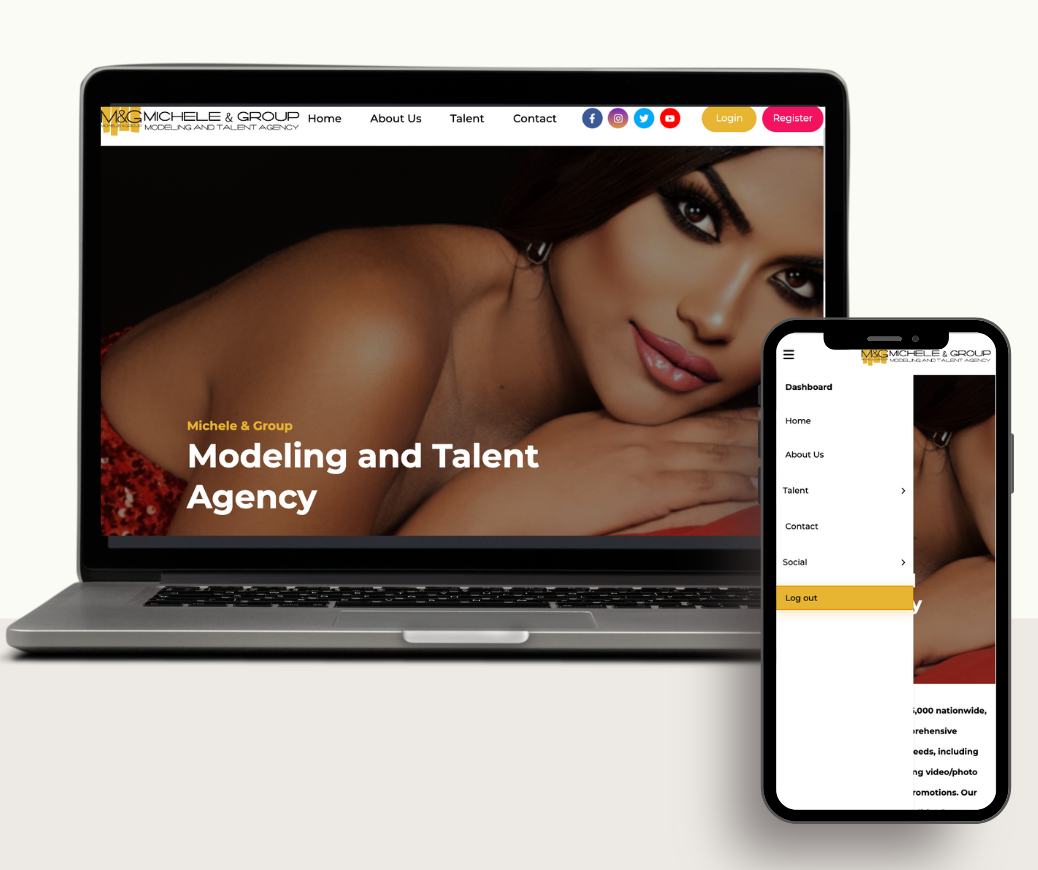
Once the Airtable backend was built, I hired a developer to turn it into a clean, intuitive frontend.
The first version included:
- Job filters
- Talent profile viewer
- Mobile-friendly layouts
- Quick links
- Booking details pages
- Access-controlled views for team members
After launch, I took over ownership of the UI.
I continue to update:
- Feature sets
- Layout and navigation
- Color coding and visual hierarchy
- Fields surfaced in each view
- New program-specific workflows
- Airtable API connections
- Quality-of-life improvements for bookers and assistants
The result is a true internal platform—not just a database—with usability tailored to how we work.
The Impact on Michele & Group
This system has made a measurable difference:
- 40–60% faster booking workflows
- Significant reduction in double bookings
- Consistent recap reports across all clients
- Higher talent satisfaction because communication is clearer
- Better client retention due to more professional delivery
- Fewer missed details because everything lives in one place
And, importantly, the agency can now confidently take on high-volume programs without overwhelming the team.
Why This Project Matters
This wasn’t just software. It was an operational transformation.
I discovered that I love:
- Building systems
- Streamlining workflows
- Designing user-friendly interfaces
- Creating structure in fast-moving environments
- Using technology to solve real-world problems
This project helped define the direction I want to grow in: operations, systems design, and organizational efficiency.
Closing Thoughts
Creating this Airtable ecosystem—and continuing to evolve the UI—has become one of my favorite professional accomplishments. It showcases the full range of my work: strategy, operations, design, automation, and problem-solving.
If your organization needs help building a similar system or rethinking how you manage operations, I’d love to talk.